
Punakaiki Fund led Hectre’s $12 million Series A in February 2026 and holds about 13% of the company. On 27 October Hectre opened a research lab in Auckland to measure fruit from the inside. Here is what the company does, who uses it, and why we backed it.
Most of the world’s fruit is still graded on a sample. A quality controller pulls a few dozen apples from a truck of several thousand, measures them by hand, and the packhouse plans a whole storage room on what they find. Hectre’s founder and chief executive Matty Blomfield describes the scale of the problem as ten pieces of fruit for a batch of 150,000.
Hectre spent four years making the sample the whole truck. Now it is working on the harder problem, which is what the fruit looks like on the inside.
What does Hectre do?
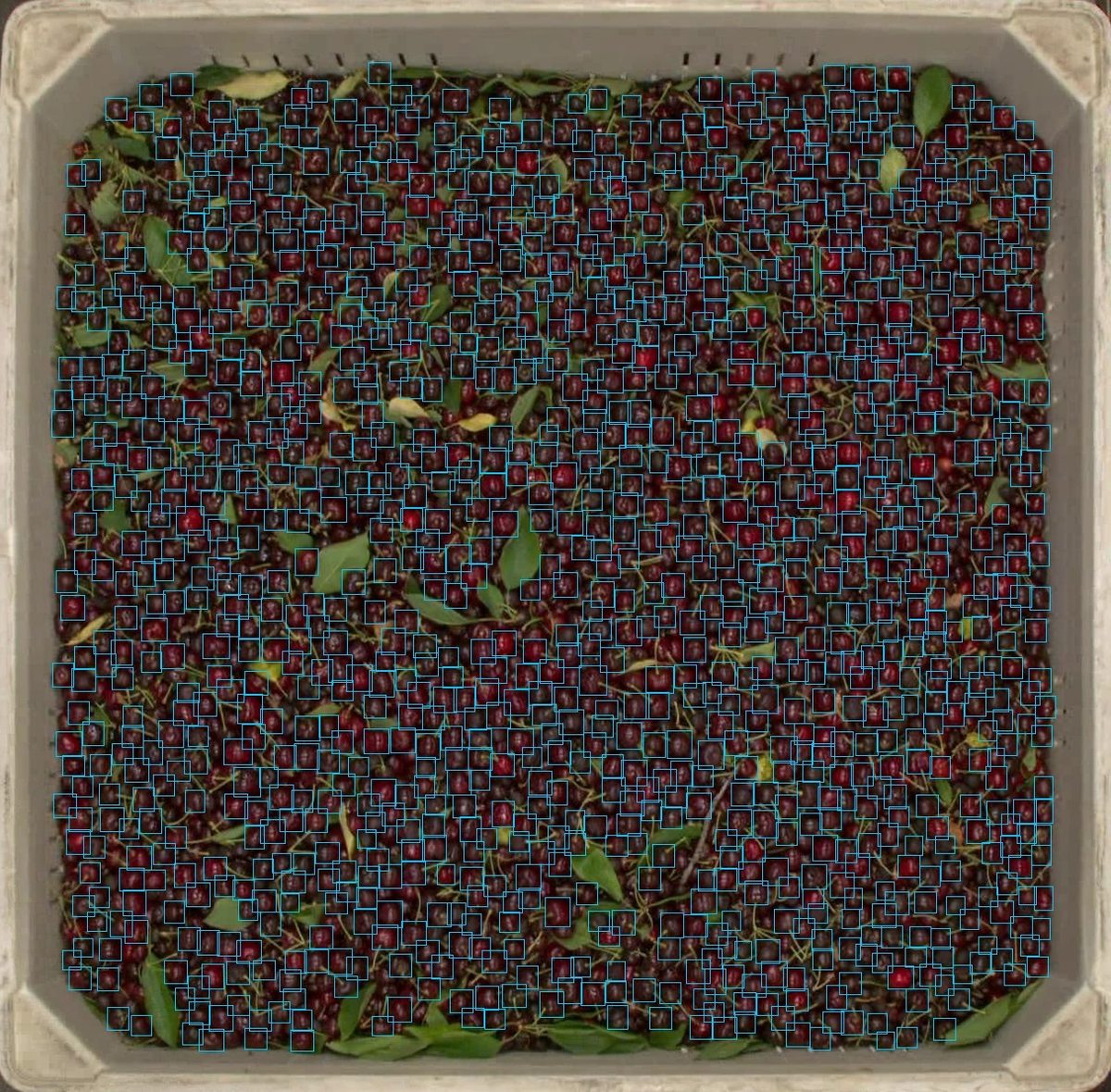
Hectre’s Arc camera sits above the receiving lane at a packhouse. As a truck pulls up, Arc photographs the top layer of every bin and its models produce a size and colour distribution for the load within minutes, matched to the packhouse’s own grader settings. The sample is now the whole truck, which the company says is around 200 times larger than manual methods allow, at accuracy approaching 99%.

The company started in a different place. Matty and his co-founders set up Hectre in 2016 after seeing that most growers and packers still ran their core processes on paper and spreadsheets. The first product was orchard management software. The imaging work began in 2019 as a phone app that estimated fruit size from a photo of a bin, and the fixed overhead camera followed in 2022. Hectre’s hardware has gone from a camera on a stick to a unit with around 156 components, designed and built in Auckland so the team can change it quickly when something is learned on a site in Chile or Italy.
Who uses Hectre, and how?
Packhouses in 22 countries, across apples, cherries, citrus and stone fruit. The customers are some of the largest fruit operations in the world:
- Borton Fruit, Washington State. One of the big apple packers of the Pacific Northwest, and a believer to the point of owning a share of the company. Arc scans every truck at receiving, so planners work from whole-load data rather than a fifty-apple sample.
- VOG, Italy. The cooperative behind a large share of Europe’s apples, with thousands of growers and multiple pack stations. Hectre gives its sales team a size distribution for every storage room, so programmes are planned on what is in the room rather than on averages.
- Cherry producers in Chile. The fastest-growing market. Cherries are high value, fragile and seasonal, and a few days’ better allocation shows up directly in the price.
In every case the data flows into the packhouse’s own planning and sales tools through Hectre’s API, and it is used through the day to decide which rooms to open, which lots to pack first and which fruit goes to which customer.
Why does it matter who measures the fruit?
The packhouse sits between thousands of growers and a small number of large buyers. It holds the critical information: what is in each room, how good it is and when it should be sold. The grower carries most of the risk. Once bins cross the weighbridge, visibility drops, and if the wrong room is opened or fruit sits too long, the grower’s return falls without any objective record of why.
That is the problem Matty has been circling since the start. Objective, auditable data on every bin changes the conversation between growers, packhouses and buyers, and in time it changes who holds the information. Hectre now has data on 54 billion pieces of fruit.
“As a New Zealander, I have seen how growers and producers seem to work the hardest and get paid the least.”
Matty Blomfield, founder and CEO, Hectre
What is the new lab for?
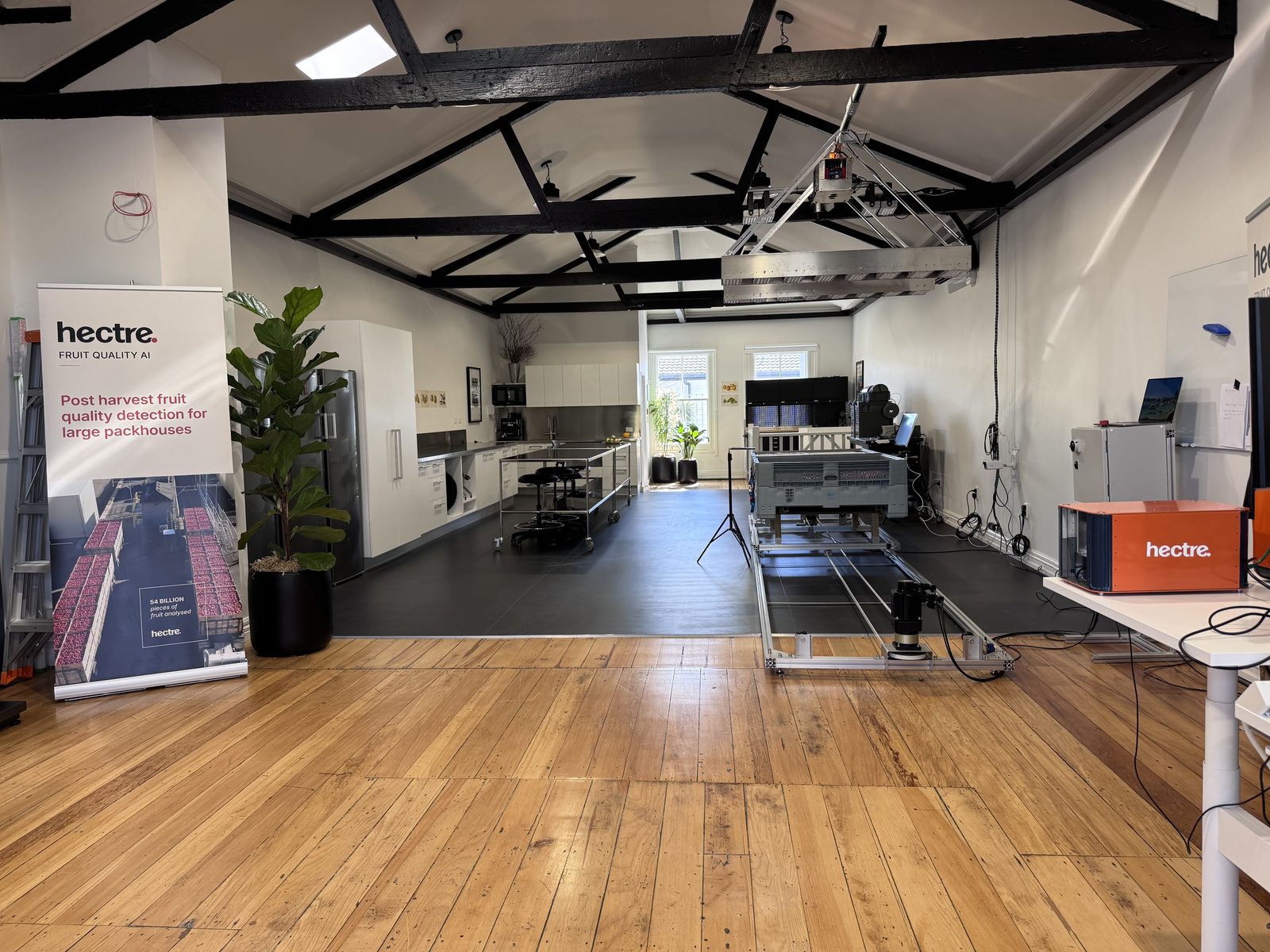
Arc today measures size, colour and external defects, all of them visible from above the bin. The lab Hectre opened in central Auckland on 27 October, with the Minister of Agriculture doing the honours, was built to measure what is inside.
The method is hyperspectral imaging. An ordinary camera records red, green and blue. A hyperspectral sensor records many more wavelengths, including some beyond what the eye can see, and measures how the fruit reflects each one. The reflection carries information about what is going on under the skin: internal defects, starch content, firmness and maturity. Packhouses measure these things today by cutting and pressure-testing a few pieces of fruit per batch. Hectre’s aim is to measure them for every bin, automatically, at receiving.
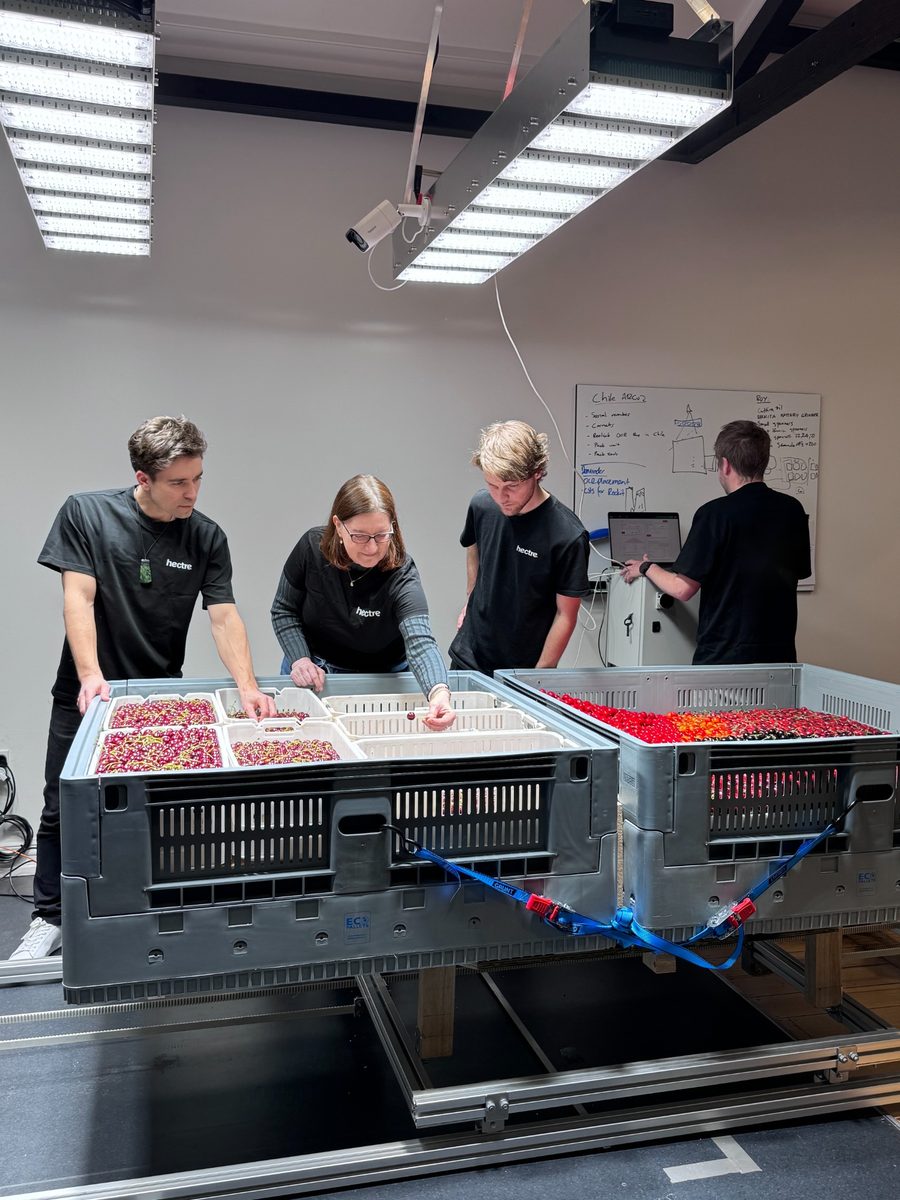
The programme runs three years and is costed at close to $5 million. Hectre to be detecting internal defects at 80% accuracy by mid-2027 and is already trialling the current upgrades with several top-tier New Zealand apple producers.
For a packhouse, knowing the internal quality of each room means knowing which fruit to sell now, which to store and which market it suits. For growers it means less avoidable waste, and the value of that waste coming back to them.
Who runs Hectre?
Matty Blomfield (Ngāti Kahungunu, Ngāti Hine) is a fourth-time founder. The product and technology function is led by Sagi Adiv, formerly general manager of product at Xero. The company was named Most Innovative Hi-Tech Agritech Solution and Māori Company of the Year at the 2026 Hi-Tech Awards, and has won its category at the AgTech Breakthrough Awards three years running.
The team is also an early example of a company using AI to build AI. Hectre has used machine learning for its scanners from the beginning, and this year it has used AI tools in its own development. Matty says the company has shipped ten times as many features since January with the same size team.
What’s next for Hectre?
The Series A is going into sales and customer success teams in Europe, Latin America and North America, where demand was already running ahead of the company’s capacity to serve it, and into the defect and maturity work the lab now houses.
Beyond that, Matty talks about a trading platform in which fruit is bought and sold on Hectre’s data rather than on a manual inspection and a phone call. He calls it a Bloomberg terminal for fruit.
Punakaiki Fund’s investment in Hectre
Punakaiki Fund led Hectre’s oversubscribed $12 million Series A in February 2026. The round was targeted at $10 million and extended. We hold about 13% of the company, and the investment was funded in part by capital raised through the Active Investor Plus visa programme, which is one of the ways that programme ends up in New Zealand companies.
We’ve backed Hectre for several reasons: the product is already in daily use at some of the largest fruit operations in the world and increasingly critical to their operations. Their revenue growth and margins are strong and the addressable market is large. Hectre also has millions of labelled fruit images paired with real grader outcomes across dozens of packhouses and several seasons. That dataset gets more valuable every season and cannot be bought by a new entrant. Finally, the direction. Internal quality is the feature every large customer asked for first, but it is an incredibly difficult technical problem to solve. The company that measures the inside of the fruit at receiving will own a dataset nobody else has.
Hectre is privately held. Punakaiki Fund is one of the few ways to own a stake in the company at this stage of its growth. If you are a wholesale investor and want exposure to New Zealand’s strongest technology companies, talk to us →
Company figures are unaudited. Holding percentages and valuations are point-in-time and not a forecast of returns. This is general information, not financial advice or an offer of financial products. Investment carries risk, including loss of capital.