

Cormac McCullough is an investment manager for Punakaiki Fund – ploughing through dozens of potential investments every month. What does he look for in a tech start-up, how does choose a winner and how did he get that job anyway?
Okay, imagine I’m a wannabe tech success. I’m pitching to you, you’re sitting there with arms folded being stern – what must I do to pique your interest? What do you look for in new investments?
I’m not stern, thank you. And I’m open to cake. Carrot or chocolate, you choose.
But more seriously, there’s two answers to that. First is our mandate. We have a well defined SIPO, short for ‘Statement of Investment Policy and Objectives’ which quickly screens out some things. From there we like to focus on growth capital, investing in behind good commercial momentum and demonstrated product-market-fit. We are happy to take execution risk, making an assessment of whether we think it is the right team with a large enough opportunity. But, we look for evidence that customers are willing to pay for the product or service, we are not a Seed Fund. Other requirements are that it be a technology company, which could be software or hardware, and be connected to New Zealand in a tangible way.
And then there are the x-factors, our view of the product and the market, the customer value that can be served, growth history and future prospects, the founders unique insight, advantage, or right to win.
But, most importantly it’s the people, believing that it is the right team is crucial. Punakaiki is an evergreen fund, which means we buy and hold for the long term. So, we need to be values-aligned, seeking ‘our kind of people’ with good character, and founders who want to grow big companies from here to the world.
If that’s all there, then we’re certainly going to have a really good look.
“I’m really excited about New Zealand …it feels like the tide’s turning. We are seeing a lot of really interesting deals. Our companies are growing and raising again. Their customers are spending again.”
What do you look for in a founder?
Determination, persistence, and resilience, especially through adversity. Energy and just being a good person, you know. It sounds simple, but something that turns you off is arrogance – someone who thinks they know it all, a lack of respect. Ultimately, this is going to be a partnership, and if someone is not kind and respectful when everyone is on their best behavior, then how about in two months or ten years’ time when things get tough?
You recently joined the Sea-Flux board and already sit on the boards of Core Schedule, GetHomeSafe and CONQA. How is joining a board?
It’s fantastic but not without its challenges. There’s always a bit of imposter syndrome because, you know, in many cases the founder has been there for years and then I waltz in. But I’m there to help and act in the best interests of shareholders, of which the founder is often the largest! So, it really comes down to asking the right questions. You’re there to question decisions, question strategies and overall support the team to keep the vision – make sure that they’ve considered things from different perspectives and can see the wood from the trees. Occasionally, you can see things that they can’t.
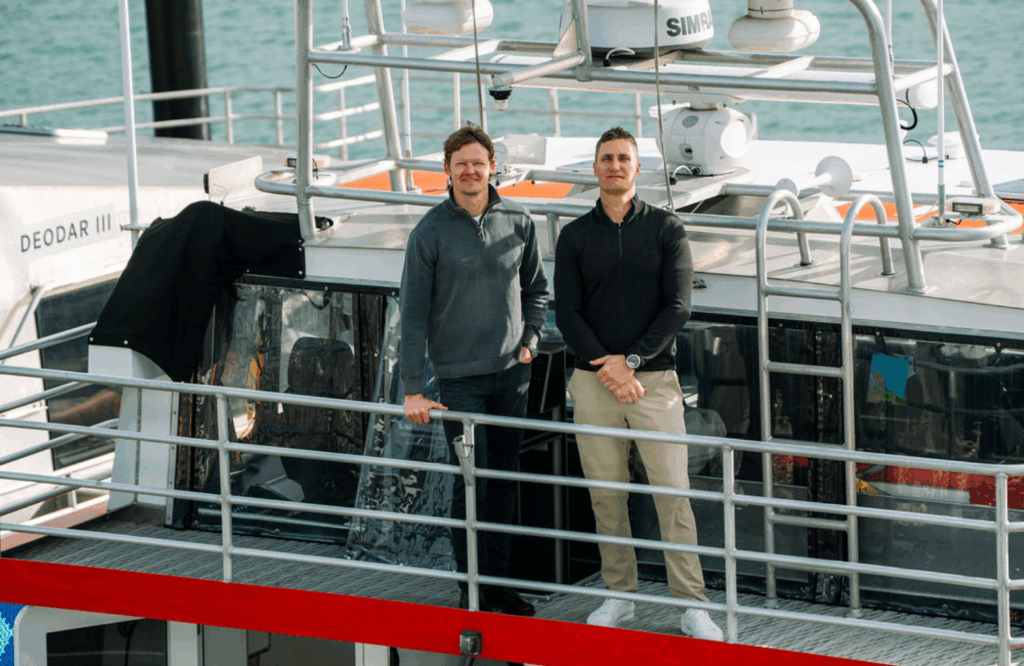
Cormac standing with Sea Flux founder and CEO Tai Ellis. Punakaiki Fund took a 13% stake in the vessel-management software business last year
What was your most interesting job before 2040 Ventures?
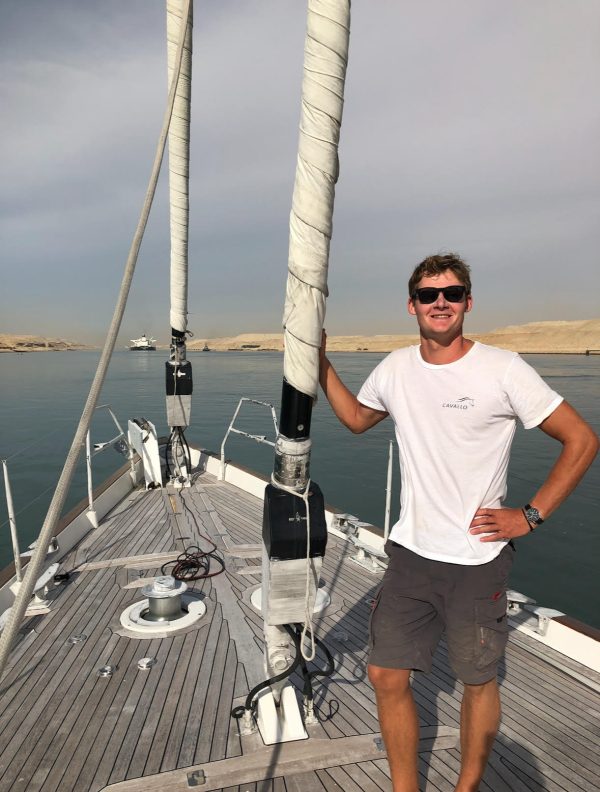
I did a couple of years sailing on super yachts which was fun, but the most interesting role was as a project engineer at Rocket Lab. I loved it there. It was before the first Electron launch, and there was this amazing energy. It had the best culture I’ve worked in (aside from 2040 Ventures, of course). Everyone was incredibly smart and motivated and really aligned around one very clear objective: we need to get this thing into space, no matter what you do or which department you’re in. Some organisations are unclear about their mission but Rocket Lab remained very clear, even as it grew.
Sounds like a dream assignment – what changed?
I’d met my (now) wife in Europe and we were trying to find a place to live and working on a visa to get her here. When she finally arrived I was living on the North Shore, commuting down to the Rocket Lab, leaving at 6am, getting home at 8pm. She’d moved to the other side of the world for me, and I didn’t think it was fair!
I also didn’t want to get pigeonholed into being the ‘Rocket Dude’. I have always been curious about business and especially tech businesses. After Rocket Lab I worked in marine engineering/yacht design and realised that while sailing would always be a passion it was better as a hobby. I wanted to see how companies could scale, not just survive.
Then I was lucky to get a role at Snowball Effect. I saw first-hand how capital can transform the prospects of a company.
It’s been a turbulent time economically in the last few years. Are you feeling optimistic?
I’m really excited about New Zealand. It’s been a tough place to be a young person, I think. I have friends and colleagues leaving for what they consider to be better opportunities overseas. But it feels like the tide’s turning. We are seeing a lot of really interesting deals. Our companies are growing and raising again. Their customers are spending again. And we’re investing in new rounds and new companies. So is our sister fund, the Climate Venture Capital series which is on to its second vintage.
We’ve created a point of difference in the market by being an evergreen fund. Coming back to that Rocket Lab example, we have clarity within the team: we fund great companies and talent and then invest and hold for a long time. It’s all about long-term growth.
A recent bonus has been the Active Investment Plus Visa scheme. We already have a strong domestic investor base but the AIP visa is bringing in fresh capital. That’s great for Kiwi companies which have typically needed to go offshore to raise larger rounds, say, over $20 million. And I think it’s fair to say that companies have also felt that New Zealand lacked the deep experience and networks found overseas that are required to scale companies globally.
The wonderful thing about the AIP Visa programme is that it is addressing both of these issues. Larger pools of capital are coming into our ecosystem, enabling funds (and Kiwi investors) to support later-stage rounds, as well as attracting top international talent who have the experience and networks to grow companies from here to the world.
I think that’s a wonderful thing.
Talk to Cormac or any of the investment team at 2040 Ventures about your start-up. Complete this simple form and someone will be in touch.